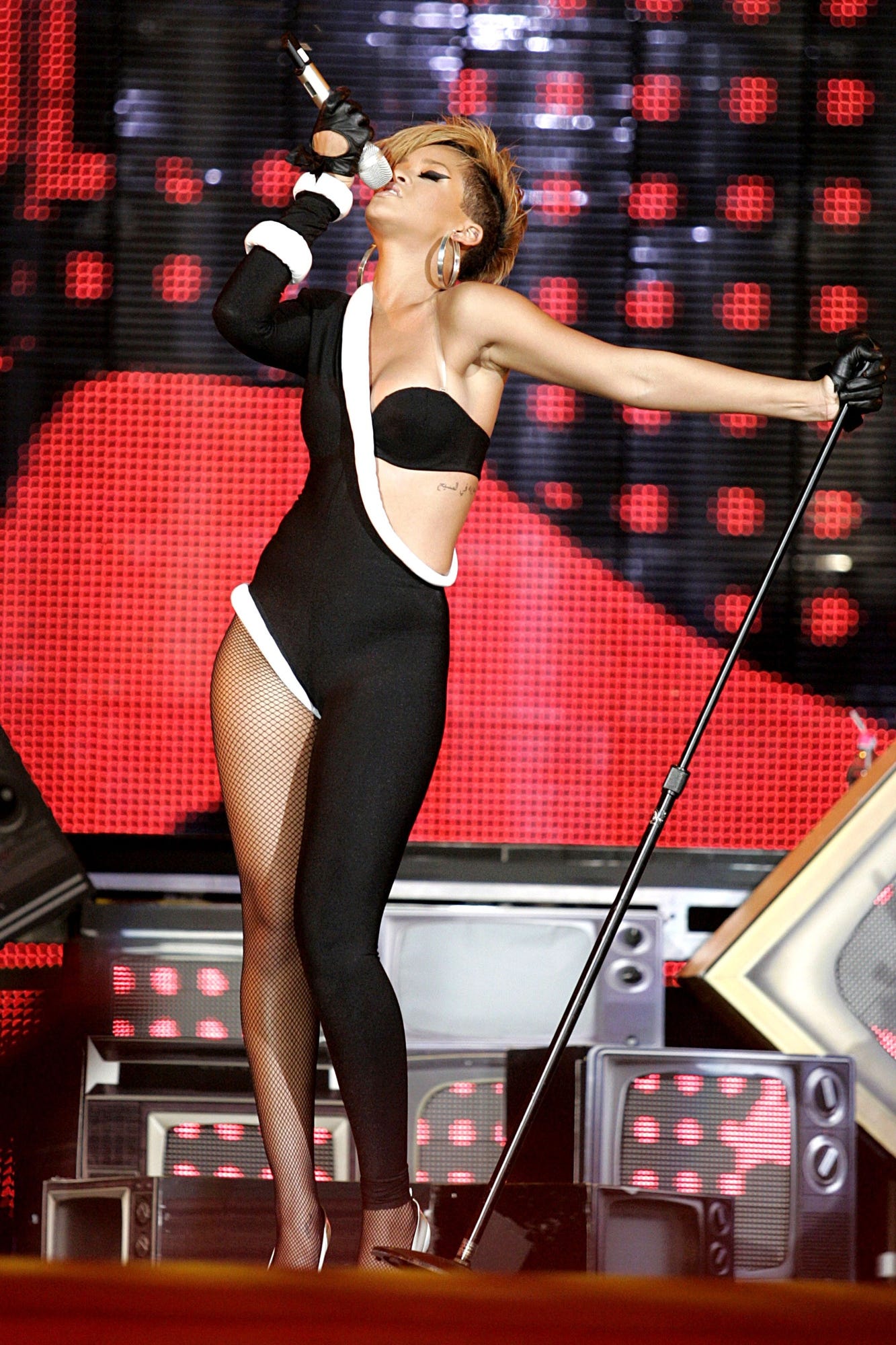
On this episode of Queue Points, we head to Bridgetown, Barbados to sit with what it really means to call Robyn Rihanna Fenty our last global pop phenomenon.
Sir Daniel and Jay Ray begin by honoring the Bajan women who helped build the lane Rihanna would eventually run. Names like Alison Hinds, Shontelle Lane, Tamara Marshall, Rosemary Phillips, and Shanta Price don’t always get the same spotlight, but their work in soca, pop, and R&B laid a foundation for what a Bajan woman on the global stage could look and sound like.
From there, the conversation rewinds to 2005 and the “Pon de Replay” era, when Rihanna was making mid‑2000s pop‑R&B squarely aimed at a younger audience. What stands out in hindsight is how intentional her career becomes over just a few album cycles: eight studio albums between 2005 and 2016, a run of 14 number one singles, nine Grammys, 12 Billboard Music Awards, 13 American Music Awards (including an Icon Award), and seven diamond singles.
But the episode isn’t just a stat sheet. The hosts sit with the cost of that pace: album after album, public scrutiny, and the question of where work ethic ends and exploitation begins. They explore how Rihanna stepped back from the release treadmill, invested in herself and her family, and re-emerged as a different kind of figure—one who could still command the Super Bowl stage while no longer centering music in the same way.
Culturally, Sir Daniel and Jay Ray place Rihanna in a lineage that includes Grace Jones and Madonna, while also naming the ways she is very much her own center of gravity. Her social media era personality, her embrace of sexuality and agency, and the evolution of “the Navy” from fandom into community all say something about a generation learning to see Black, Caribbean womanhood as aspirational on a global scale.
By the end, Queue Points invites listeners to accept that Rihanna may never return to music the way some fans hope—and to find something liberating in that. The catalog is there, the performances are there, and the possibility she represents for Black women, Caribbean artists, and global pop will remain, whether or not we ever get another album.