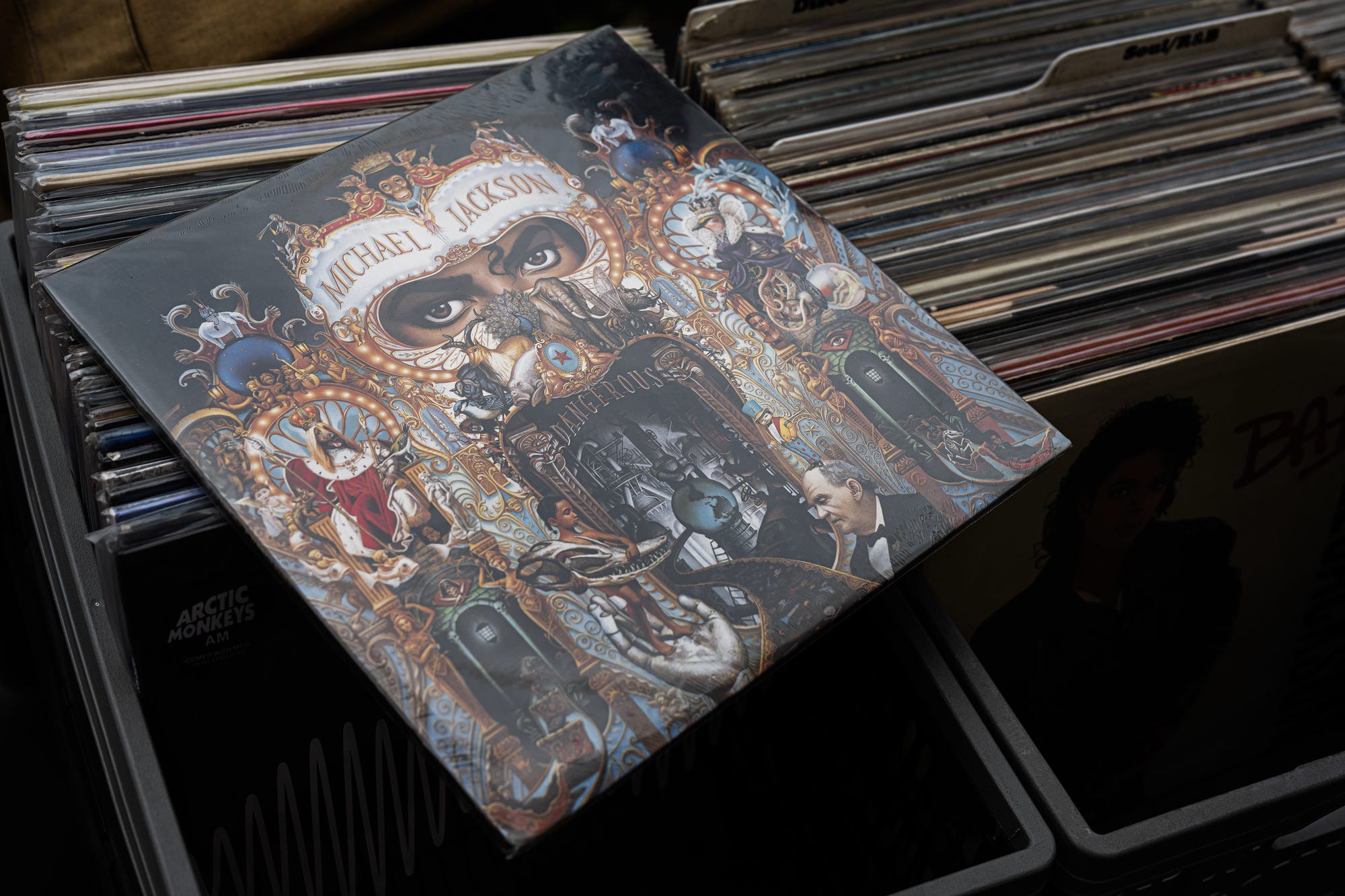
If you grew up in a Black household in the early 90s, there’s a good chance Michael Jackson’s Dangerous is tied to a specific memory. Maybe it is a night in front of the TV waiting on a world premiere. Maybe it is a school hallway the next morning, packed with kids trying to nail the “Remember the Time” routine. On this episode of Queue Points, DJ Sir Daniel and Jay Ray sit with those memories and walk back through the album that closed out Michael’s classic run.
They start with the set‑up. By the time Dangerous dropped in 1991, Michael was already larger than life. He had left Quincy Jones, the producer behind Off the Wall, Thriller and Bad, which meant this album had a lot to live up to. At the same time, pop music had shifted. Madonna, George Michael and Tina Turner were ruling global pop stages, and Janet Jackson had already delivered Control and Rhythm Nation, changing what a pop era could look like. Michael wanted to step into the 90s with a sound that matched the moment.
Enter New Jack Swing. Sir Daniel and Jay Ray talk about how linking with Teddy Riley brought Michael into that harder, drum‑heavy groove Black radio was already in love with. From the opening tracks, Dangerous sounds like MJ deliberately walking onto R&B and hip‑hop’s block while still carrying the polish of his earlier work. Behind the boards you still have familiar names like Bruce Swedien and Bill Bottrell, so the record feels like a bridge between “classic MJ” and the newer street‑leaning production.
Of course, you cannot talk about Dangerous without talking about the videos. The hosts remember how each one felt like an event, backed by network TV slots and heavy promotion. “Black or White” arrived as a full‑on prime‑time moment, complete with Macaulay Culkin, Tyra Banks in her early “being extra” era, and that new morphing technology everyone talked about at school. The conversation gets into the controversy around the extended ending, with Michael smashing windows and dancing in the street, and how that sequence connected to the racial tension of the early 90s.
From there, they move into “Remember the Time,” which both hosts treat as a true Black cultural checkpoint. The video premiered on Fox, likely during In Living Color, and immediately became the only thing folks were talking about in homeroom the next morning. Eddie Murphy and Iman as Egyptian royalty, Magic Johnson popping up, the Fly Girls all over the screen and Fatima Robinson’s choreography pulling in the Bart Simpson dance that kids in Atlanta and beyond were already doing at parties. Jay Ray notes how, despite all the debates about Michael’s appearance at that point, “Remember the Time” centers a very Black visual world: Black stars, Black dancers, and Michael doing the same moves you would see at a teen club or basement party.
The episode does not just stay on the two biggest singles. Sir Daniel and Jay Ray show love to “In the Closet,” a favorite in DJ sets thanks to its New Jack Swing breakbeat and that whispered vocal from Princess Stéphanie of Monaco. They shout out Naomi Campbell’s presence in the video and talk about how Dangerous leans more into sensuality than some of Michael’s earlier work. They also run through the long list of singles – “Jam,” “Who Is It,” “Heal the World,” “Give In to Me,” “Will You Be There,” “Gone Too Soon” – and remember when a major album like this could be worked for two or three years straight.
Underneath all the stories, the hosts keep coming back to one idea: Dangerous feels like the end of an era. When you line up Off the Wall, Thriller, Bad and Dangerous, this album plays like the last chapter of Michael’s “classic” period before his career got tangled up in personal troubles and shifting public opinion. They talk about the massive Dangerous Tour, the financial risk Michael took to stage it, and those now‑familiar images of him standing silently in aviator shades while crowds fainted in waves.
By the close of the conversation, Sir Daniel and Jay Ray have painted Dangerous as more than a 90s pop project. For Black listeners especially, it is a time capsule. It holds Sunday nights in front of the TV, debates about videos in school hallways, New Jack Swing at full strength and a superstar trying to grow with the culture that raised him.