At first glance, the Electric Slide, the Cha-Cha Slide and The Wobble might look like simple party starters. But as Jay Ray and DJ Sir Daniel unpack in this episode of Queue Points, these Black line dances are doing much more than filling the floor; they’re carrying stories, memory and a sense of belonging from generation to generation.
“Whenever it’s happening, it’s almost like church—when two or more are gathered and they’re doing the Electric Slide, it’s a call.”
- DJ Sir Daniel
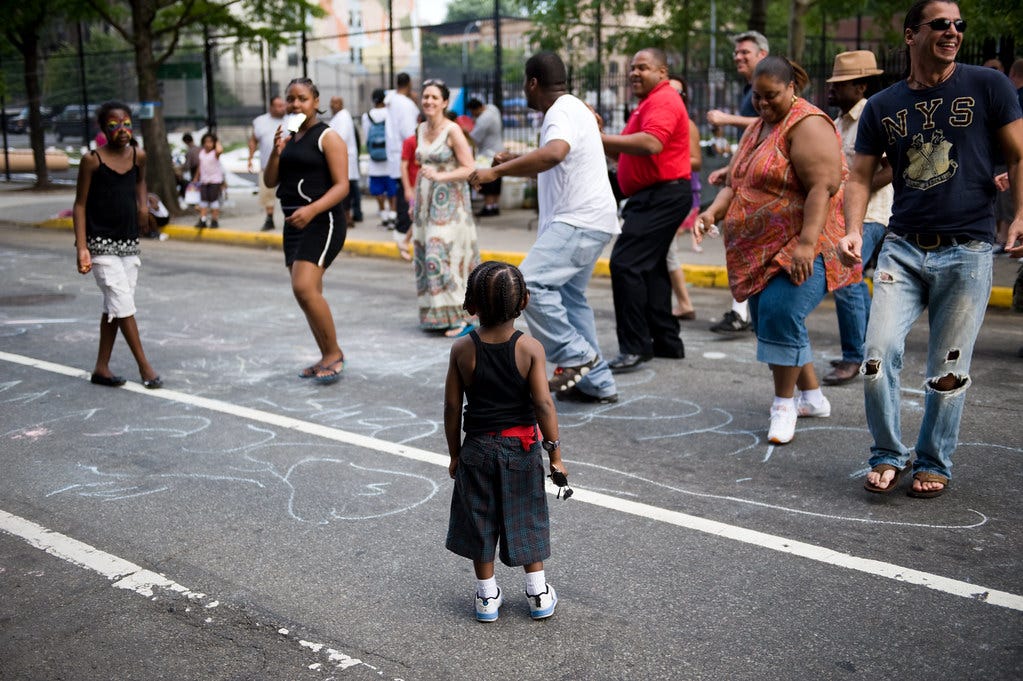
Line dances, as DJ Sir Daniel puts it, are a throughline of Black history in America. They show up at weddings, reunions, graduations, baby showers and block parties; anywhere Black folks gather to celebrate and mark a rite of passage. When the DJ hits that familiar intro, people of all ages step into formation, no questions asked. You don’t have to know anyone in the room to join in, and that’s the point.
Jay Ray shares how he learned the Electric Slide in his Aunt Evone’s living room in the late 1980s, dancing to Marcia Griffiths’ “Electric Boogie,” written by Bunny Wailer. That everyday ritual of practicing steps after school becomes part of a larger story about how Black families quietly pass down culture. Sir Daniel, on the other hand, describes learning the dance “by fire” on the floor, with aunties making sure he didn’t mess up the sequence—a reminder that community will correct you because it wants you to belong.
“At our events, at our barbecues, at our reunions—young and old can participate, and that is Black culture through and through.”
- Jay Ray
The episode also traces the unexpected origins of the Cha-Cha Slide. Created by Chicago’s DJ Casper for a Bally’s fitness class and built on the pulse of “Plastic Dreams,” the song began as a practical tool to get people moving. Its call-and-response instructions—“clap your hands,” “slide to the left”—turned it into an on-ramp for folks who might otherwise stay on the wall. By the early 2000s, it was everywhere: cruise ships, school dances, family functions.
Throughout the conversation, Jay Ray and Sir Daniel highlight how these dances open space for people who don’t feel comfortable with one-on-one or “intimate” dancing but still want to participate. A five-minute line dance record lets the DJ grab a plate, but it also gives shy guests permission to step into a shared groove without being singled out.
Underneath the fun, there’s a spiritual layer. The hosts compare the Electric Slide to church: when two or more are gathered and the line forms, anybody who knows the steps is invited to fall in. There’s no gatekeeping, just a moving, breathing expression of Black joy, discipline and unity on the floor.
In telling the stories behind the Electric Slide, Cha-Cha Slide and The Wobble, Queue Points makes the case that these aren’t just party songs, they’re living archives of Black community in motion.
Here’s a great video of the dance we now call ‘The Wobble’ in it’s earlier form as the ‘Nasty Girl.’
Here’s the instructor, Bernadette Burnette, discussing it on her Facebook page.